Ahead of the historic event, State President Lương Cường sent a message to world leaders, emphasizing Vietnam’s commitment to fighting cybercrime, sharing global responsibility, and building a safer digital future together.
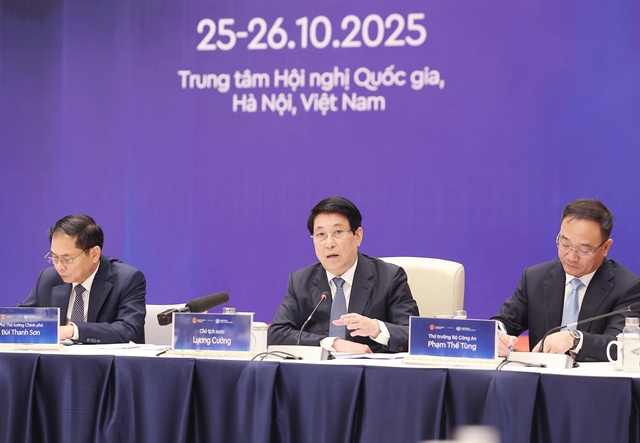
HÀ NỘI — The signing ceremony of the UN Convention against Cybercrime (Hanoi Convention), taking place in Hà Nội on October 25–26, marks a major step forward in global cooperation on cybersecurity and holds special importance for Việt Nam’s multilateral diplomacy.
In the lead-up to this historic event, State President Lương Cường sent a message to world leaders highlighting Việt Nam’s commitment to fighting cybercrime, sharing global responsibility, and building a secure digital future. He reaffirmed the country’s dedication to solidarity, cooperation, and the rule of law in safeguarding cyberspace — a common asset of all humanity.
The UN General Assembly officially adopted the convention on December 24, 2024, and selected Hà Nội as the venue for the signing ceremony. This reflects the global community’s recognition of Việt Nam’s active and responsible role in tackling cybercrime — a modern, non-traditional security challenge that deeply affects global peace, stability, and development.
The event comes at a crucial moment, as the digital revolution drives rapid innovation while also increasing cyber risks and vulnerabilities. Cybercrime today is more advanced, borderless, and complex, spanning areas such as financial fraud, data theft, and attacks on critical infrastructure and government systems.Global and Regional Cybercrime Trends
Global and Regional Cybercrime Trends
According to United Nations reports, cybercrime causes over US$8 trillion in economic damage worldwide each year, with millions of cyberattacks occurring every day.
In the United States, the Federal Bureau of Investigation’s Internet Crime Complaint Center (IC3) reported in its 2024 Internet Crime Report that it received 859,532 complaints of suspected internet crime, with total reported losses exceeding 16 billion USD, representing a 33 percent increase compared to 2023.
In Europe, the European Union Agency for Cybersecurity (ENISA) documented 11,000 cyber incidents in its 2024 Threat Landscape report. Ransomware and DDoS attacks were among the most serious threats, disrupting operations in sectors such as healthcare, education, and public services.
In Việt Nam, the cybercrime landscape has become increasingly complex in terms of scale, nature, and impact. According to Major General Lê Xuân Minh, Director of the Department of Cybersecurity and High-Tech Crime Prevention (A05 – Ministry of Public Security), more than 100,000 cyber-related incidents were recorded last year.

The Growing Need for Global Cooperation Against Cybercrime
Cybercriminals are increasingly moving from isolated, small-scale attacks to well-organized, transnational operations, often targeting critical national infrastructure and major economic enterprises.
Addressing these threats effectively requires multilateral cooperation, including mutual legal assistance, the sharing of electronic evidence, and coordinated efforts to strengthen cybersecurity capabilities worldwide.
In this context, the Hanoi Convention marks an important milestone, providing countries with a framework to turn commitments into concrete legal obligations and enhance international collaboration against cybercrime.
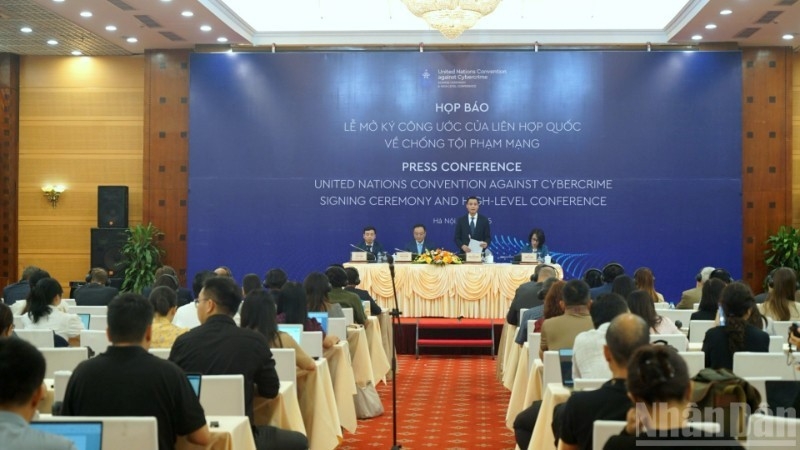
The Hanoi Convention, initiated in 2019 through a UN General Assembly resolution, is the first comprehensive international treaty on cybercrime under the UN framework and the first new multilateral anti-crime treaty in nearly 20 years since the Palermo Convention of 2000. After eight negotiation rounds and five intersessional meetings over 30 months, the convention was formally adopted on December 24, 2024.
The Hanoi Convention consists of nine chapters and 71 articles, addressing a wide range of issues including definitions of cyber offenses such as illegal access, system interference, online child abuse, and money laundering. It also covers jurisdiction and investigative measures for evidence collection and prosecution, procedural safeguards, law enforcement provisions, international cooperation for joint investigations, preventive measures, capacity-building, awareness-raising, and technical support.
Ghada Waly, Executive Director of the United Nations Office on Drugs and Crime (UNODC), described the adoption of the convention as a major victory for multilateralism, marking the first international anti-crime treaty in 20 years. She emphasized that it is a crucial step in combating online child sexual abuse, sophisticated scams, and money laundering. Waly also highlighted the growing threat of cybercrime in the digital age, which exploits vulnerable populations and causes massive economic losses, and stated that UNODC is ready to assist member states in implementing the treaty.
Deputy Minister of Foreign Affairs Đặng Hoàng Giang, former Permanent Representative of Việt Nam to the UN, emphasized that Việt Nam strongly supported the convention from the beginning. From 2022 to 2024, an inter-agency working group led by the Ministry of Public Security and the Ministry of Foreign Affairs actively participated in all negotiation rounds under the guidance of the State President.
Việt Nam contributed to shaping international legal frameworks that protect national interests and advocated for key principles in the convention, including upholding national sovereignty, independence, non-interference, and compliance with international law, ensuring cooperative efforts serve the common interest of all nations. Việt Nam also coordinated several critical provisions during negotiations, earning recognition from international partners for its constructive role in finalizing a balanced convention.
This marks the first time a global multilateral convention in such a dynamic and high-stakes area is associated with a Vietnamese city, reflecting the international community’s recognition of Việt Nam’s substantial contributions to the creation of this legal instrument.