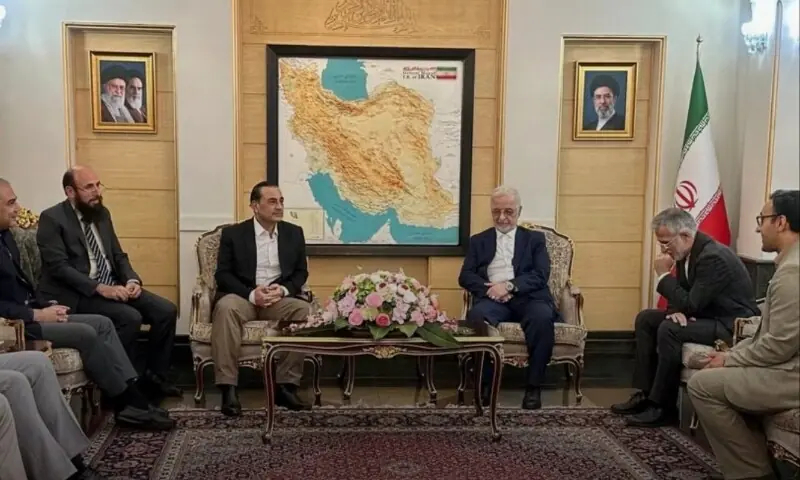
Chief of Defence Forces (CDF) and Chief of Army Staff Field Marshal Syed Asim Munir arrived in Tehran on Monday and held a meeting with Iranian Interior Minister Eskandar Momeni.
CDF Munir Meets Iranian Interior Minister in Tehran as Pakistan Pushes for Regional Peace
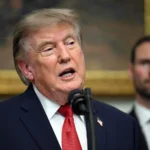
Trump said the United States was preparing to impose unprecedented economic pressure on Iran as the conflict in the region approaches its sixth month. His announcement signals a significant expansion of Washington’s strategy of isolating the Iranian economy and targeting its international trade relationships.
The renewed pressure comes as the Strait of Hormuz remains heavily disrupted, creating growing concerns over global energy supplies and international trade. The strategic waterway is a major route for oil and gas shipments, meaning continued disruption could have consequences well beyond the region.
Trump also warned that countries conducting business with Iran could become targets of the new campaign. His remarks suggest that Washington may seek to increase pressure not only on Tehran but also on governments and companies that maintain economic links with Iran.
In a statement posted on his Truth Social platform, Trump described the initiative as an unprecedented campaign of economic warfare and isolation against Iran. He presented the measures as an effort to place maximum pressure on the Iranian economy and further restrict Tehran’s access to international markets.
The announcement comes at a politically sensitive moment for the Trump administration. With the November elections approaching, the US president is facing renewed questions over the financial cost of the conflict, its impact on American consumers and the strain placed on US military resources.
Strait of Hormuz Adds to Economic Concerns
The continuing disruption around the Strait of Hormuz has added another layer of uncertainty to the confrontation. Any prolonged restriction on the movement of energy shipments through the waterway could push up global oil prices and increase transportation and production costs.
Analysts have warned that a wider economic confrontation involving countries trading with Iran could further complicate an already fragile global economy.
For Iran, expanded US sanctions could place additional pressure on energy exports, foreign trade and access to international financial networks. For countries that maintain commercial relations with Tehran, however, the threat of secondary economic penalties could create difficult choices between preserving trade ties with Iran and avoiding confrontation with Washington.
A Wider Economic War?
Trump’s latest announcement raises the possibility of a broader economic battle extending beyond the United States and Iran. If Washington moves aggressively against third countries or companies accused of supporting Tehran, the policy could create new tensions with US allies and major trading partners.
The immediate question is how far the administration will go in enforcing its threat and which countries or companies could be affected.
With the conflict showing no clear diplomatic resolution and the Strait of Hormuz remaining under pressure, Trump’s new economic strategy could become one of the most consequential developments of the confrontation—potentially affecting not only Iran but also global energy markets and international trade.
The coming weeks are likely to reveal whether Trump’s warning develops into a comprehensive economic blockade or becomes the opening phase of a broader campaign to isolate Iran from the global economy.