Nato chief Mark Rutte and German Chancellor Friedrich Merz respond to reports of Russian plans to launch nuclear weapons into space.
NATO Warns of Space-Based Threats as Reports Suggest Russia May Be Developing Nuclear-Armed Satellite
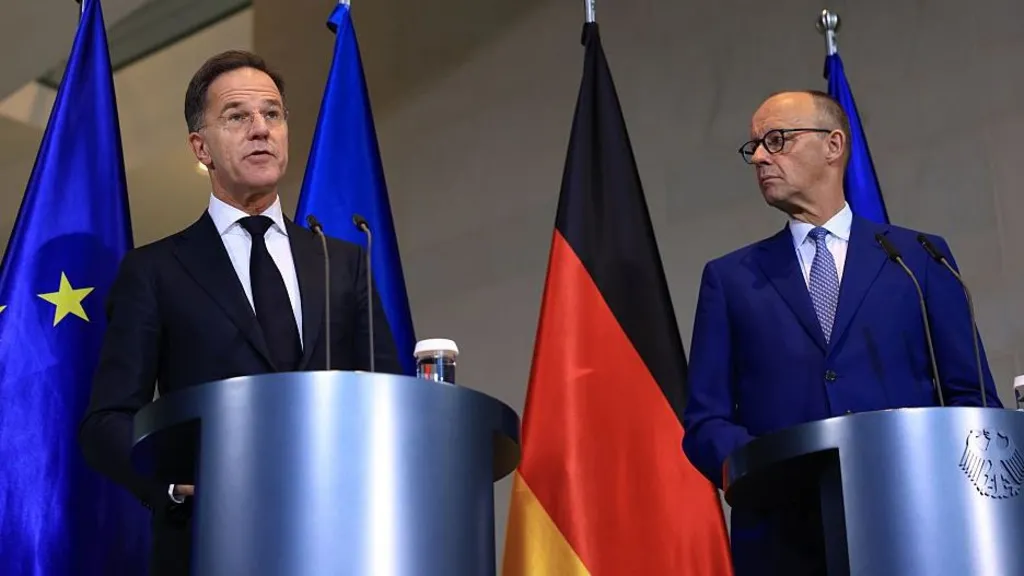
NATO Secretary General Mark Rutte has warned that the alliance is prepared to defend against emerging threats in space following reports that Russia may be preparing to launch a satellite equipped with a nuclear warhead.
The reports, published by German media outlets, have raised fresh concerns among Western governments about the potential militarisation of space and the possibility of nuclear weapons being deployed beyond Earth’s atmosphere.
According to German public broadcasters NDR and WDR, along with the newspaper Süddeutsche Zeitung, intelligence assessments shared among NATO member states this month indicate that Russia could be preparing to launch the satellite within the next 60 days. The reports cited anonymous German military and intelligence sources, although the country responsible for producing the original intelligence assessment remains unclear.
The satellite, reportedly identified as “Sputnik-S”, is believed to be designed to carry a nuclear warhead capable of disrupting or destroying other satellites. Such a capability could threaten critical space infrastructure used for military communications, navigation, surveillance and civilian services.
NATO Promises Response to Emerging Space Threats
Addressing the reports during a joint press conference in Berlin with German Chancellor Friedrich Merz, NATO chief Mark Rutte stressed that the alliance would not allow emerging threats in space to undermine its security.
Rutte reiterated NATO’s commitment to defending every part of its territory, emphasising that space has become an increasingly important component of modern military operations.
He also indicated that the alliance regularly evaluates its defence and deterrence capabilities and would introduce necessary adjustments in response to evolving military threats.
Although Rutte did not confirm the intelligence reports about Russia’s alleged satellite programme, his remarks highlighted growing concerns within NATO over the strategic importance of space-based infrastructure.
Germany Expresses Serious Concern
German Chancellor Friedrich Merz described the reports as deeply concerning, stating that although similar warnings were not entirely new, they remained shocking.
Merz avoided confirming or denying Russia’s alleged plans but argued that the reported developments demonstrated the level of escalation Moscow might be willing to pursue.
German government spokesman Stefan Kornelius also confirmed that Berlin was treating the intelligence information seriously. However, he cautioned against creating unnecessary public anxiety over potential threats that had not yet been independently established.
Moscow Rejects the Allegations
Russia has strongly rejected claims that it is preparing to deploy nuclear weapons in space.
Kremlin spokesman Dmitry Peskov said he had not personally reviewed the intelligence reports and dismissed media coverage based on unidentified sources as unreliable.
The Russian Embassy in Berlin also rejected the allegations, describing them as unfounded and suggesting that they were part of a wider Western propaganda campaign.
Moscow has previously denied accusations of developing nuclear-armed anti-satellite systems. In 2024, US intelligence raised similar concerns about a possible Russian space-based nuclear weapon.
At that time, Russian President Vladimir Putin insisted that Moscow opposed the deployment of nuclear weapons in space and maintained that Russia had no intention of violating international restrictions.
Why a Nuclear Weapon in Space Could Be Dangerous
Experts warn that deploying a nuclear weapon in orbit could have devastating consequences for global satellite infrastructure.
Josef Aschbacher, Director General of the European Space Agency, described the possibility of nuclear weapons being placed in space as an extremely dangerous scenario.
Bleddyn Bowen, Co-Director of the Space Research Centre at Durham University, explained that detonating a nuclear device in orbit could produce widespread damage to satellites and other critical infrastructure.
With more than 15,000 active satellites operating around Earth, the consequences could extend far beyond military targets. Satellite networks support internet connectivity, weather forecasting, navigation, financial systems, emergency communications and international transportation.
A nuclear explosion in space could generate radiation and electromagnetic effects capable of disabling multiple satellites simultaneously. Such damage could also affect Russia’s own space infrastructure, making the potential consequences indiscriminate.
Space Is Becoming Another Military Battlefield
The growing concerns surrounding Russia’s alleged programme come amid an international competition to develop advanced space-based military capabilities.
The United States, China and Russia have all been associated with efforts to develop or explore technologies capable of monitoring, disrupting or targeting rival satellites.
In September, US Secretary of the Air Force Troy Meink revealed that American space-control weapons were already operating in orbit. However, he did not disclose specific technical details about these capabilities.
The announcement prompted criticism from Moscow, with Peskov reiterating Russia’s position that space should remain free from weapons.
The increasing dependence of modern militaries on satellite networks has transformed outer space into a strategically important domain. Disabling an opponent’s satellites could undermine its ability to communicate, gather intelligence, navigate and coordinate military operations.
International Treaty Raises Questions
The potential deployment of nuclear weapons in orbit would also raise serious questions about international law.
Russia is a signatory to the 1967 Outer Space Treaty, which prohibits countries from placing nuclear weapons or other weapons of mass destruction in orbit around Earth or stationing them in outer space.
The treaty was established to prevent the militarisation of space through weapons of mass destruction and to promote the peaceful exploration and use of outer space.
Any confirmed deployment of a nuclear-armed satellite would therefore represent a major challenge to the existing international arms-control framework.
A New Front in Global Security Competition
The latest allegations highlight how competition between major powers is increasingly extending beyond traditional battlefields into space.
While NATO maintains that it is prepared to respond to emerging threats, Russia continues to reject Western accusations of developing nuclear weapons for deployment in orbit.
For now, the reported 60-day launch timeline remains an intelligence claim rather than an independently confirmed development. Nevertheless, the possibility of nuclear weapons being introduced into Earth’s orbital environment has intensified concerns among Western governments and space experts.
As global economies and military systems become increasingly dependent on satellites, the consequences of a conflict in space could extend across the entire international community.