Despite an intensified U.S.-led effort to restrict Iran’s oil exports, a vast offshore anchorage near Malaysia has emerged as one of the world’s busiest marketplaces for sanctioned crude.
In the Waters Off Malaysia, Iranian Oil Sales Continue Despite Blockade
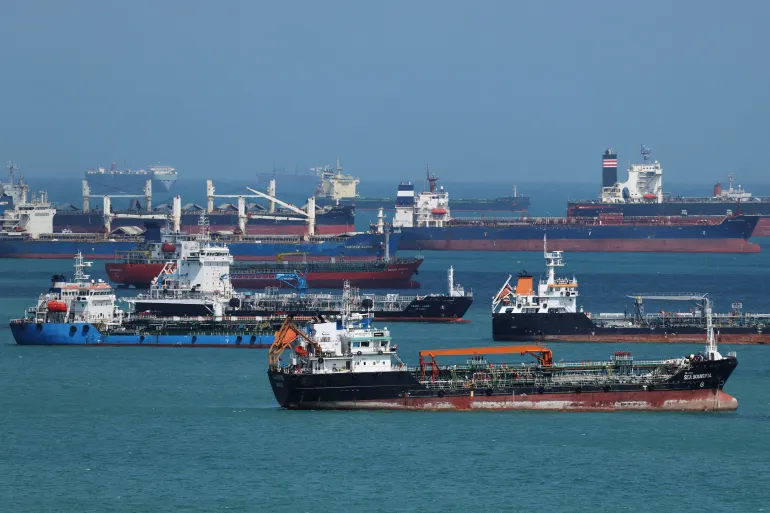
Shipping analysts and satellite-tracking firms say dozens of tankers loaded with Iranian crude have gathered in the Eastern Outer Port Limits (EOPL), an anchorage area off Malaysia’s coast. There, oil is routinely transferred from one vessel to another in complex ship-to-ship (STS) operations designed to disguise the cargo’s origin before it continues toward Asian buyers, primarily China.
Floating Marketplace for Iranian Oil
The offshore anchorage has effectively become a floating oil marketplace. Rather than sailing directly from Iranian terminals to customers, sanctioned crude is transferred between tankers, often accompanied by changes in vessel names, flags, ownership records, or tracking signals.
Industry intelligence firms estimate that more than 130 million barrels of Iranian crude remain stored aboard tankers at sea, including cargoes waiting near Malaysia and ships unable to leave the Persian Gulf due to renewed maritime restrictions.
Energy analysts say these offshore transfers provide buyers with plausible deniability regarding the oil’s true origin while helping Iran maintain exports despite international sanctions.
China Remains the Primary Buyer
China continues to be Iran’s largest oil customer, reportedly purchasing around 90% of Tehran’s crude exports. Most cargoes transferred off Malaysia eventually head toward independent Chinese refineries, commonly known as “teapot refineries,” located in provinces such as Shandong.
Although official Chinese customs data no longer reports direct imports of Iranian crude, analysts believe imports continue through intermediaries after the oil is blended or relabeled during offshore transfers.
Shadow Fleet Keeps Oil Moving
Iran relies heavily on what analysts describe as a “shadow fleet”—a network of aging tankers operating under changing ownership structures and multiple national flags. Many vessels switch off their Automatic Identification System (AIS) transmitters, conduct transfers at sea, or alter shipping documentation to evade sanctions.
These tactics have enabled Iranian exports to continue even after the United States strengthened maritime enforcement and targeted vessels suspected of transporting sanctioned crude.
Malaysia Faces Enforcement Challenges
Malaysian authorities acknowledge that many ship-to-ship transfers occur close to—but often outside—the country’s territorial waters, limiting their legal authority to intervene.
The Malaysian Maritime Enforcement Agency (MMEA) says enforcement is complicated by jurisdictional boundaries, insufficient intelligence sharing, and the international nature of maritime operations. Officials also warn that offshore oil transfers pose environmental and navigational risks in one of the world’s busiest shipping regions.
U.S. Pressure Continues
Washington has increased pressure on Iran’s oil trade through sanctions, tanker seizures, and stricter monitoring of maritime routes. However, analysts note that oil already loaded onto tankers before new restrictions took effect continues moving through offshore storage hubs such as those near Malaysia.
Recent investigations indicate that billions of dollars’ worth of Iranian crude have continued reaching Asian markets despite the blockade, underscoring the resilience of Tehran’s sanctions-evasion network.
Global Energy Implications
The continued movement of Iranian oil has significant implications for global energy markets. By sustaining exports, Iran secures an important source of government revenue while providing Chinese refiners with discounted crude.
Energy experts say the persistence of these offshore trading networks demonstrates the limitations of sanctions enforcement at sea. As long as buyers remain willing to purchase discounted oil and ship-to-ship transfer hubs remain active, Iran is expected to maintain a substantial presence in global oil markets despite ongoing geopolitical tensions.