Using fake flags, shell companies and disabled tracking signals, a vast network of vessels bypassed the US naval blockade of the Strait of Hormuz.
Tracking the shadow fleet: How Iran evaded the US naval blockade in Hormuz
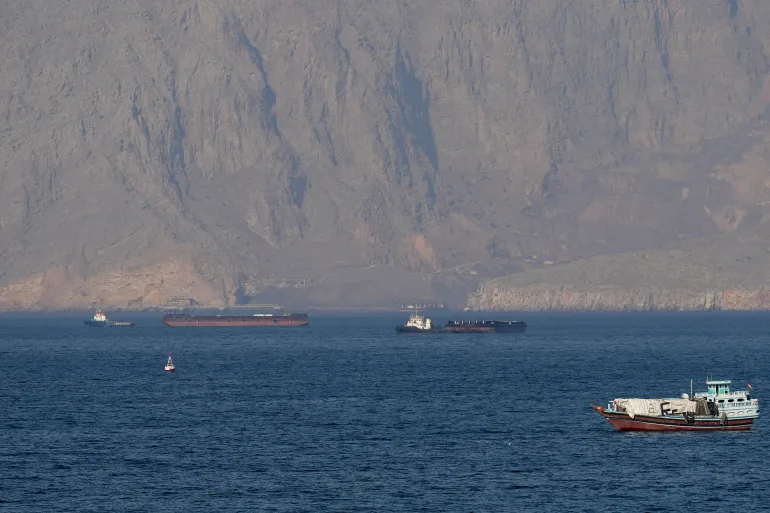
On March 11, the Thai cargo ship Mayuree Naree was struck by two projectiles while crossing the Strait of Hormuz, one of the world’s most important waterways located between Iran and Oman. A fire broke out in the engine room, and while 20 sailors were rescued, three remained trapped inside the stricken vessel. Their remains were found weeks later when a specialised rescue team boarded the vessel, which had run aground on the shores of Iran’s Qeshm island.
At about the same time, a “shadow fleet” of tankers continued to navigate the very same waters safely. Operating with fake flags, disabled signals and unspecified destinations, this covert armada survived because it operates outside the traditional rules of maritime trade.
Iran threatened to block “enemy” ships passing through the Strait of Hormuz – a crucial chokepoint for a fifth of the world’s oil – in the wake of the United States-Israeli war launched on February 28. Soon, navigation through the strait was disrupted amid fears of attacks.
Following a temporary ceasefire on April 8, the United States imposed a full naval blockade on Iranian ports on April 13. Theoretically, traffic through the strait should have come to a complete halt.
However, tracking data reveals a remarkably different reality.
The UN considers Israeli settlements in Palestinian territories illegal and has repeatedly called for a halt to settlement expansion in the occupied West Bank.
About 750,000 Israeli occupiers live in 141 illegal settlements and 224 outposts in the West Bank, including around 250,000 in East Jerusalem, which the UN considers part of the occupied Palestinian territories.
Since October 2023, attacks by the Israeli army and occupiers in the West Bank have killed at least 1,154 Palestinians, injured about 11,750 others, and led to nearly 22,000 arrests, according to official Palestinian data.
These violations include property destruction, home burnings, forced displacement, and expansion of illegal settlement activity, with Palestinians warning that such policies pave the way for the annexation of parts of the West Bank by Israel.