Deep beneath Norway’s rugged mountains and Arctic terrain, a network of military bunkers built during the Cold War is returning to strategic importance.
Why Norway Is Restoring Its Cold War Military Bunkers Amid Rising Tensions with Russia
Norway, a founding member of NATO and one of Russia’s closest neighbors in the Arctic, is increasingly focused on strengthening its defensive infrastructure amid growing geopolitical uncertainty. Military planners believe that hardened underground bases, originally constructed to withstand attacks during the Cold War, could once again play a vital role in protecting critical military assets.
A Legacy of the Cold War
During the decades-long standoff between the Western alliance and the Soviet Union, Norway occupied a strategically sensitive position. Sharing a border with the Soviet Union in the far north, the country became an important frontline state for NATO.
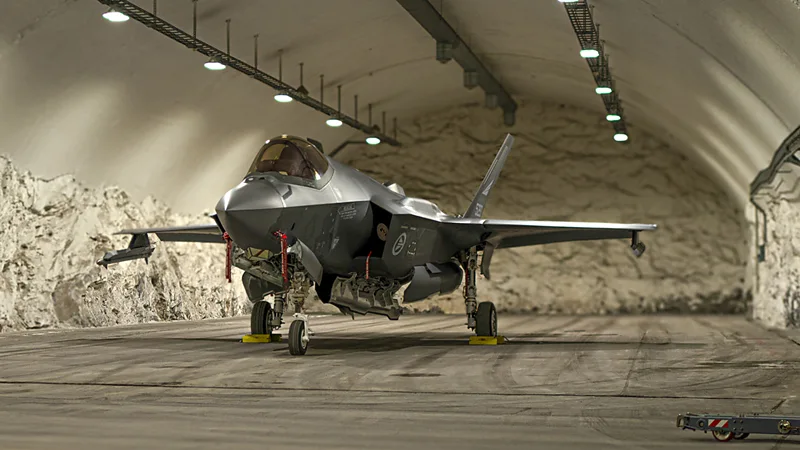
To safeguard military aircraft, naval vessels, equipment, and personnel, Norway invested heavily in underground military facilities. Massive hangars were carved into mountains, creating hidden shelters capable of protecting fighter jets from air strikes and surveillance. Naval bases were also constructed inside fjords and beneath rocky terrain, allowing vessels to remain concealed from potential adversaries.
These facilities were designed with survival in mind. Thick layers of rock provided natural protection against bombs, missile attacks, and even the possibility of nuclear conflict. For decades, they represented a critical component of Norway’s defense strategy.
The Return of Underground Defense
Following the collapse of the Soviet Union in 1991, many of these military installations saw reduced use. Defense priorities shifted, and some underground facilities were partially decommissioned or maintained at minimal operational levels.
However, the security environment in Europe has changed dramatically in recent years. Russia’s military modernization efforts, increased activity in the Arctic, and the war in Ukraine have prompted NATO members to reassess their defense capabilities.
As a result, Norway has begun restoring and upgrading several Cold War-era bunkers. Military officials view underground facilities as a practical solution to modern threats, particularly precision-guided missiles, drone attacks, and long-range surveillance systems.
Unlike traditional air bases, underground hangars offer enhanced protection against attacks that could otherwise disable aircraft on the ground. In an era when drones can identify and strike military targets with unprecedented accuracy, concealed facilities provide a valuable defensive advantage.
Protecting Advanced Fighter Aircraft
One of the primary reasons for revitalizing these underground bases is the need to safeguard high-value military equipment, including advanced fighter jets.
Modern combat aircraft represent enormous investments for defense forces. A single fighter jet can cost tens of millions of dollars, making protection of these assets a strategic priority.
Facilities such as those near Bardufoss in northern Norway can house aircraft within reinforced mountain structures, shielding them from aerial reconnaissance and potential attacks. Military analysts note that underground storage not only improves survivability but also enhances operational readiness during times of crisis.
By keeping aircraft protected until they are needed, Norway can preserve critical combat capabilities even during sustained military operations.
Growing Importance of the Arctic
The Arctic region has become increasingly significant in global security planning. Melting sea ice, expanding shipping routes, and growing competition for natural resources have transformed the region into an area of strategic interest for multiple nations.
Norway’s northern territories serve as a gateway to the Arctic and are located near Russia’s Northern Fleet, one of Moscow’s most important military assets.
Defense experts argue that maintaining robust military infrastructure in the region is essential for monitoring activity, supporting NATO operations, and deterring potential aggression.
Underground facilities provide a unique advantage in this environment. Their concealed nature makes them difficult to detect and target, while their location allows rapid deployment of forces when required.
NATO’s Northern Strategy
Norway’s bunker restoration efforts are part of a broader trend among NATO members seeking to strengthen defense capabilities across Europe.
Several countries are investing in hardened infrastructure, ammunition stockpiles, air-defense systems, and military readiness programs. The renewed emphasis reflects concerns that future conflicts could involve extensive missile strikes, cyber operations, and drone warfare.
Military planners increasingly recognize that survivability is just as important as firepower. Facilities that can withstand attack and continue operating may play a decisive role in future conflicts.
For NATO, Norway’s underground bases offer valuable strategic depth in the alliance’s northern flank. They can support aircraft operations, logistics networks, and rapid-response missions across the Arctic and North Atlantic regions.
Preparing for Future Threats
While officials stress that the restoration of military bunkers is a defensive measure, it reflects a broader shift in European security thinking. Lessons learned from recent conflicts have highlighted the vulnerability of exposed military infrastructure.
The resurgence of underground military facilities demonstrates how older defense concepts can regain relevance when new threats emerge. Technologies may have changed dramatically since the Cold War, but the fundamental challenge of protecting critical assets remains the same.
As geopolitical competition intensifies and military technology evolves, Norway’s mountain bunkers are once again becoming symbols of strategic preparedness. What was once a relic of Cold War history is now being transformed into a key component of modern defense planning.
For Norway and its NATO allies, the message is clear: in an age of drones, precision missiles, and hybrid warfare, the protection offered by underground fortifications may prove more valuable than ever.